Skip to main content
arrow_circle_down
China Biographical Database Project (CBDB)
menu
close
Menu
Search
Search
search
China Biographical Database Project (CBDB)
HOME
About Us
About Us
expand_more
History of CBDB
Core Institutions and Editors
Funders
Collaborators
Working Groups for Historical Periods
Technical Development and Text Mining
Current Subprojects in Harvard
Past Subprojects in Harvard
Crowdsourcing Projects
Open Source Community(GitHub)
Exclusive Commercial License
Visiting CBDB Cambridge
Methodology
Methodology
expand_more
Prosopography
GIS: Mapping and Analyzing
Social Networks
Sources
Sources
expand_more
How CBDB collects data and why you do not always find what you want
CBDB Sources
Coverage of CBDB
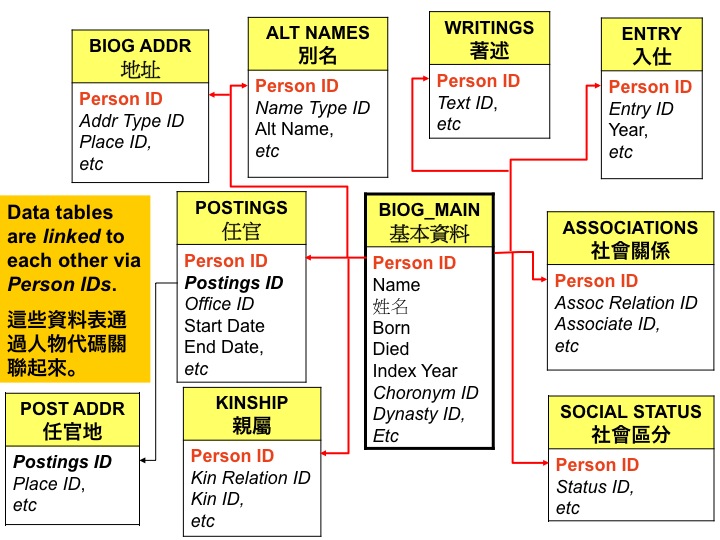
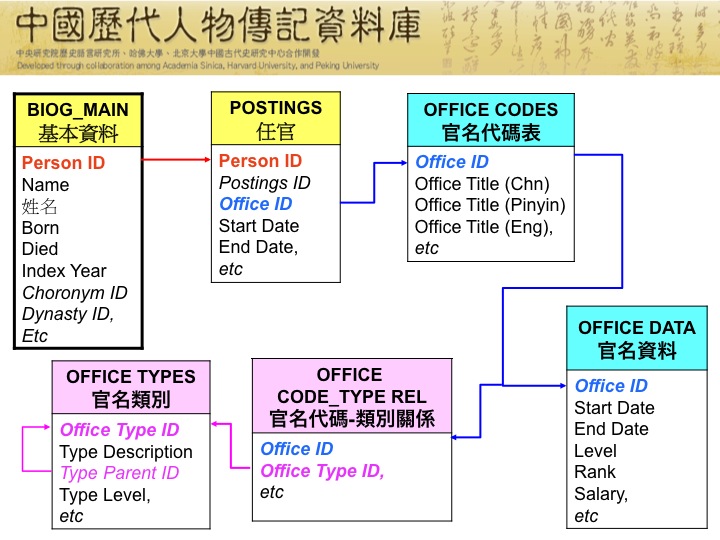
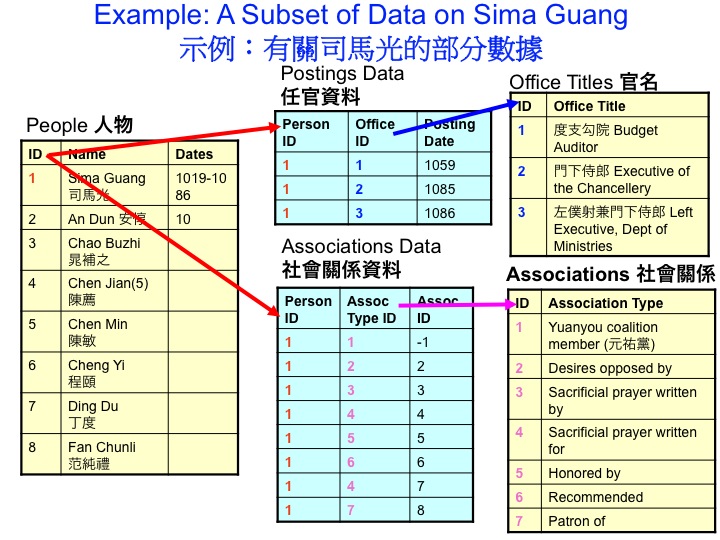
Structure of CBDB
Events
Events
expand_more
CBDB 20th Anniversary Symposium
Cyberinfrastructure Conference
International conference on the cyberinfrastructure for historical China studies
2007 Prosopography of Middle Period China
2008 First International Workshop on Biographical Databases for China's History
2010 Computational Method & China's History
2013 Tang Workshop
2014 Training Workshops around the World
2015 Training Workshops around the World
2016 Training Workshops around the World
2016 Keynote Talk on CBDB by Professor Ping-tzu Chu in Taiwan
Plan for a Conference on Cyberinfrastructure
Download Center
Download Center
expand_more
Download CBDB Standalone Database
Supporting Documents
Presentations and Papers
Download Supporting Software
CBDBRegexMachine
Data Sets
CBDB API
CBDB Linked Open Data
Report an Error
Blog
Blog
expand_more
Newest blogs
Previous blogs
中文
Breadcrumbs
Home
chevron_right
Galleries
chevron_right
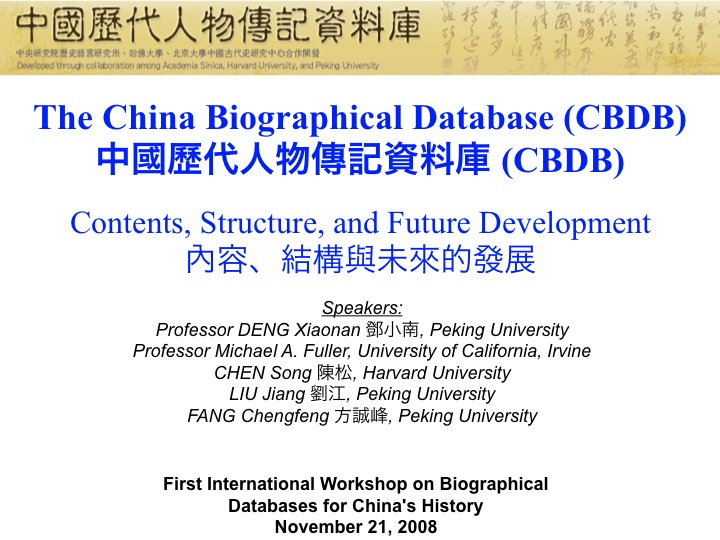
The China Biographical Database: Contents, Structure, and Future Development
The China Biographical Database: Contents, Structure, and Future Development