
Summary of the reporting session of CBDB Visiting Scholars (2022-2023)
October 6, 2023, was the day of 2022-2023 CBDB Visiting Scholars’ reporting session. As an annual tradition, 10 scholars presented this year at CGS Knafel K354.
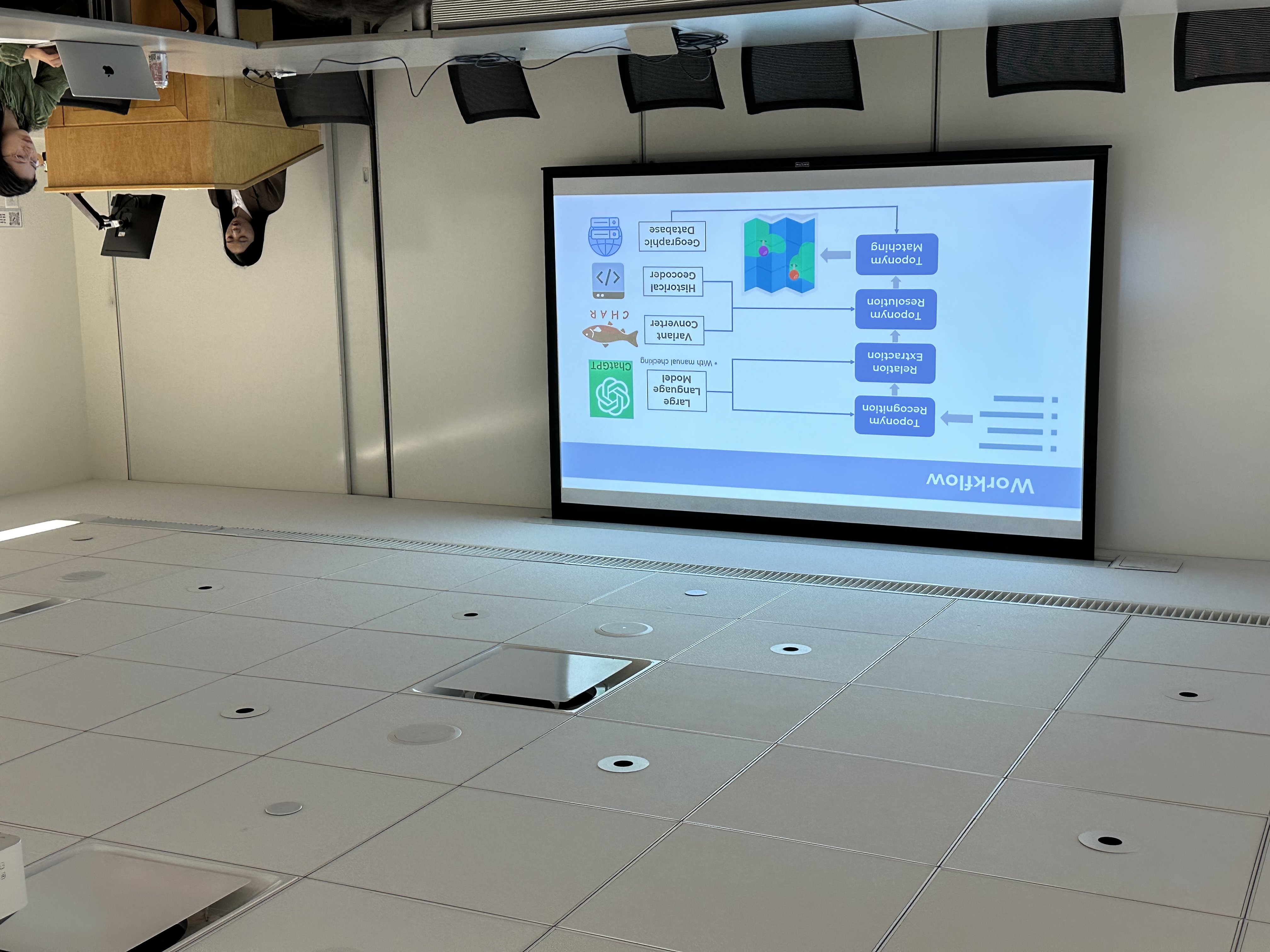
Speaker: Yuqi Chen Photographer: Kaini Xiong
Yuqi Chen, a Ph.D. Candidate from Peking University, kicked off the series with her presentation, “Geocoding the Past World: Unearthing Coordinates of Early China from Text Using Large Language Models.” She mentioned that while chronology aids historians navigate the vast river of time, historical geographic data anchors events and objects in the expansive landscape - from war sites, migration routes of peoples and ethnic groups, to the birthplaces of individuals. Databases such as CHGIS have made significant strides in this arena, but a great deal of valuable historical geographic information is still scattered in intricate texts. Geographical data from early China, in particular, remains largely undigitized. Now, with the semantic comprehension capabilities of large language models, extracting structured historical place names from natural language texts and subsequently geocoding them has become a feasible endeavor. Utilizing ChatGPT, Yuqi’s team have extracted nearly a thousand place names from reference works on early Chinese historical geography, spanning from the Western Zhou to the Spring and Autumn and Warring States periods, and encoded them into modern geographic coordinates, crafting the first pre-Qin address table for CBDB.
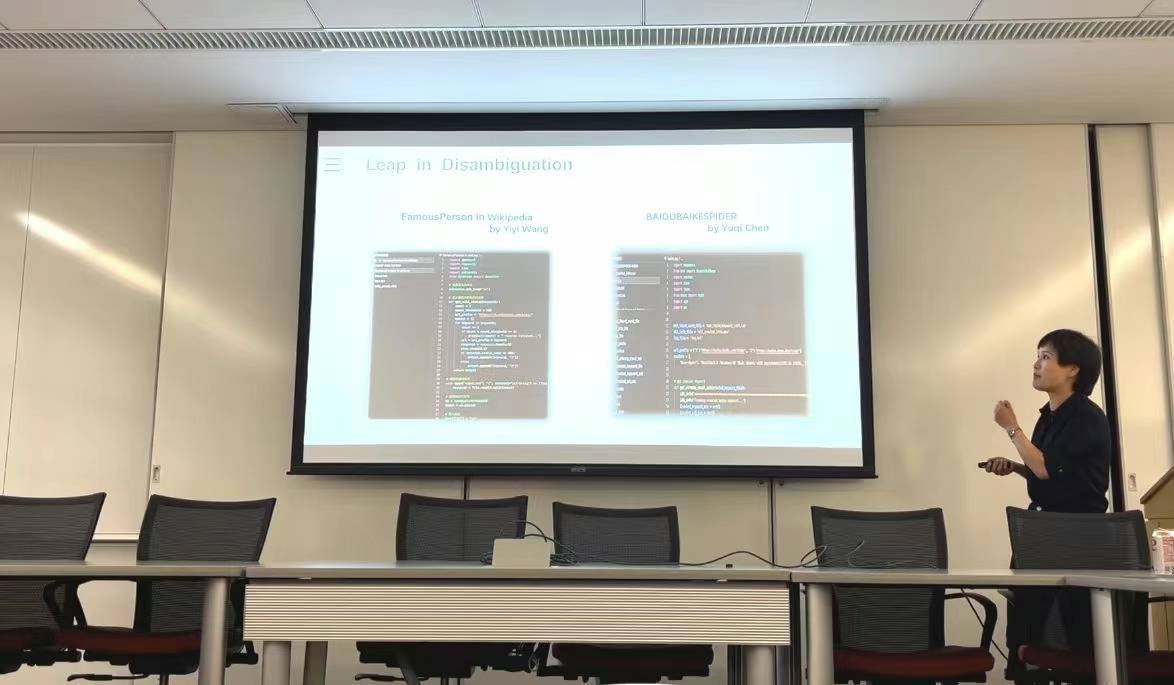
Speaker: Kaini Xiong Photographer: Fengyi Ji
Professor Kaini Xiong from Hubei University of Education presented her project entitled “From OCR to Data Structuring - Data Processing and Analysis of Hubei Literati Collection.” Professor Xiong’s project is about Hubei poetry compilation, and she has completed the data processing and is now in the pre-recording, disambiguation and coding phase. The source she uses, Hannan Poetry Collection, has completed OCR recognition. Professor Xiong demonstrated a comparison of the recognition results of different OCR software (ABBYY, BAIDU API, Taiwan’s Academia Sinica, and Guji·Cool) in terms of recognition efficiency and discuss the selection criteria for suitable recognition text. Furthermore, she conducted a comparative analysis of various methods and the time required for data structuring. Lastly, she performed spatiotemporal analysis based on her data.
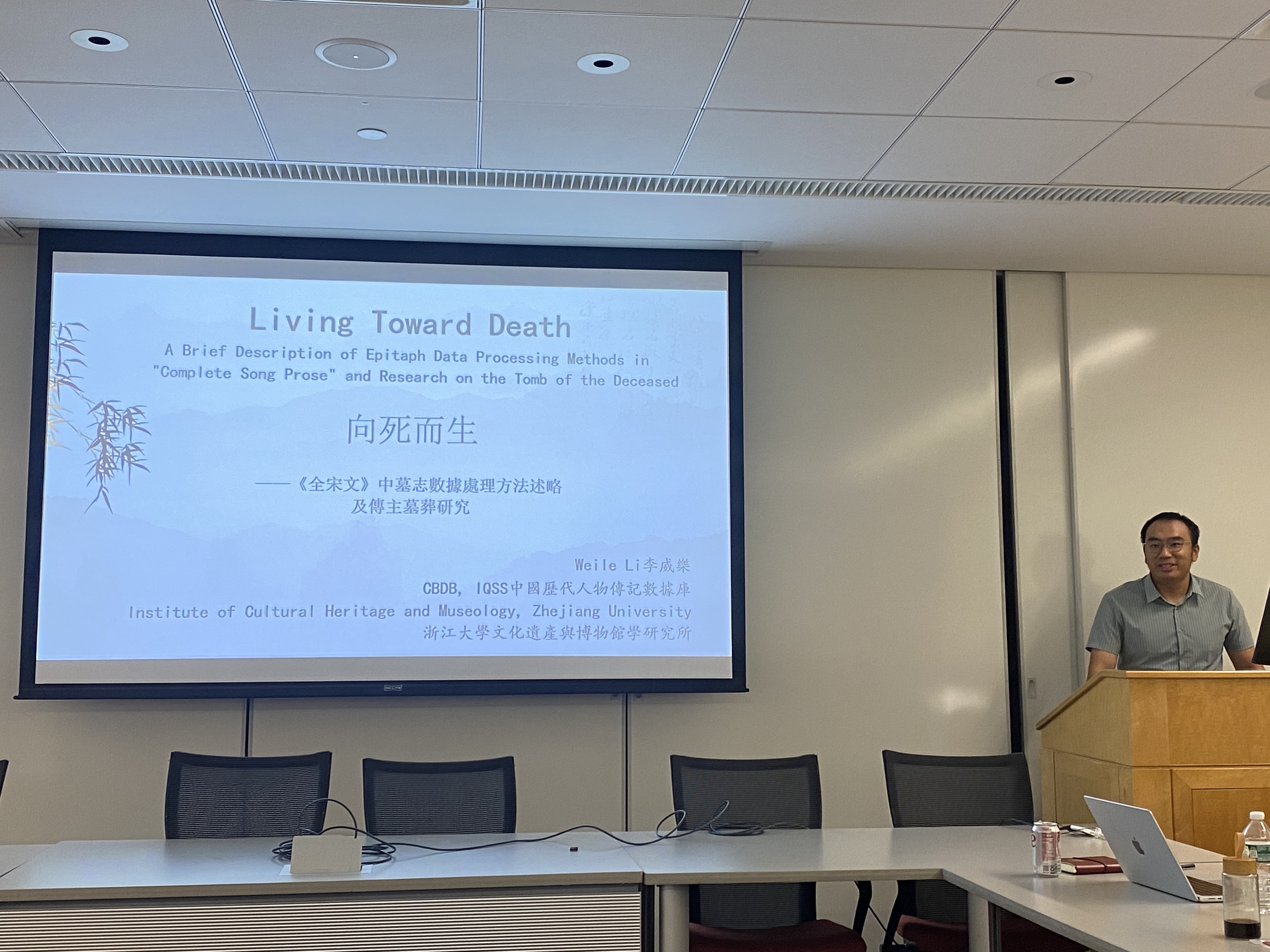
Speaker: Weile Li Photographer: Kaini Xiong
Weile Li, a Ph.D. Candidate from Zhejiang University, gave his presentation entitled, “Preliminary Work Methods for Capturing and Processing Epitaphs in the “Quansongwen (全宋文).” His work at CBDB focuses on the collection of epitaph data from the “Quansongwen”. The first part of the report provided background knowledge on the related concepts of “Quansongwen” and “Epitaph.” Based on the previous extraction and numbering of epitaphs in “Quansongwen,” Weile first used regular expressions to capture the epitaph owner’s information, and then evaluated the completeness of the tomb owner information in the CBDB system. On the premise of confirming the completeness of the tomb owner’s information, regular expressions were further used to capture the kinship information of the tomb owner such as female kinship, male kinship, and child kinship. This process also includes detailed information such as name, address type of kinship, official position, information on official entry, and kinship of kinship. Currently, the collection of male kinship information is in progress.
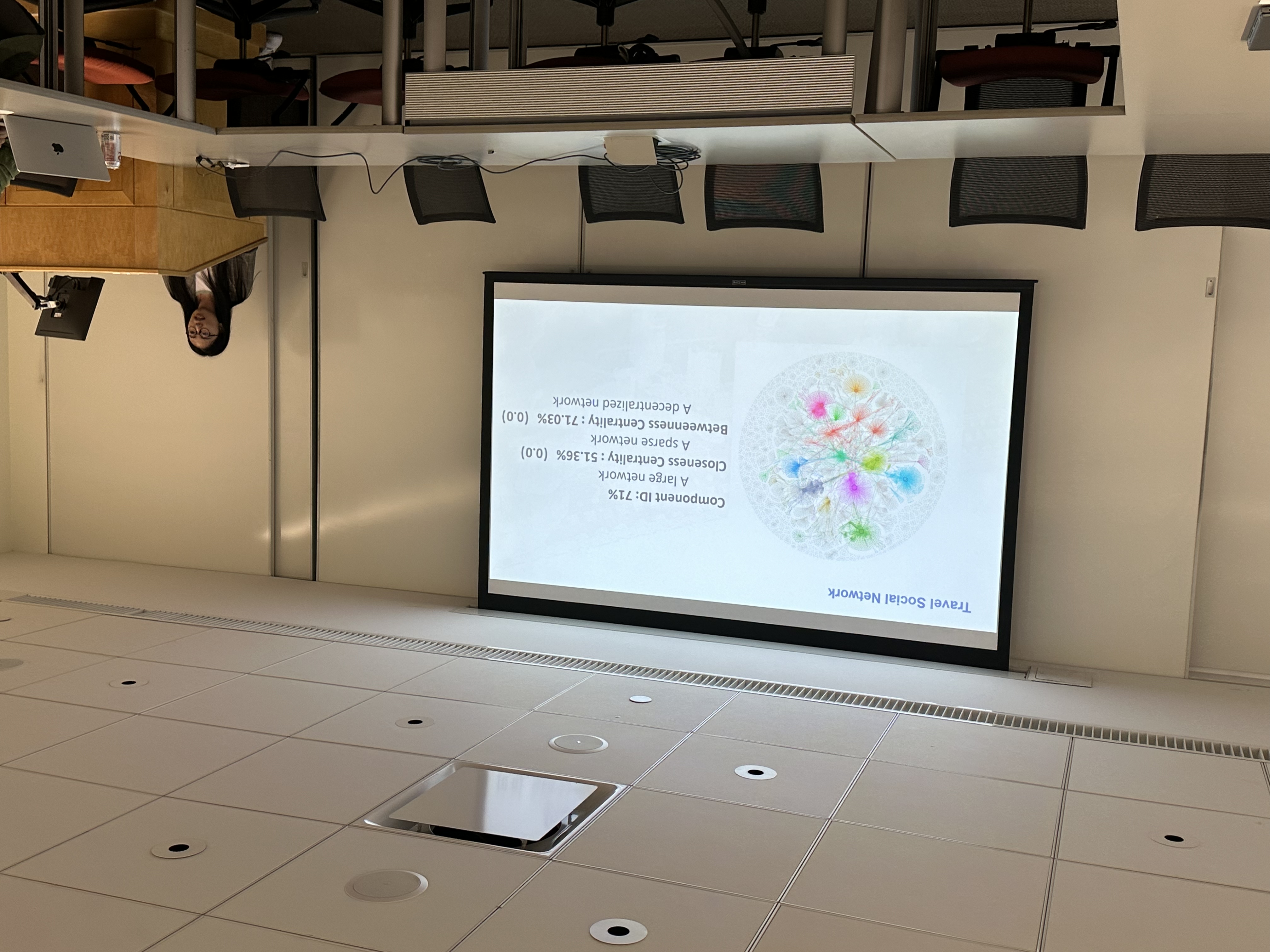
Speaker: Fengyi Ji Photographer: Kaini Xiong
Fengyi Ji, Ph.D. Candidate from Peking University, presented her work entitled “With Whom and Where Did They Go? Data Mining Based on Travel Records of Ming Dynasty.” Drawing upon pre-existing travel notes and harnessing the principles of feature engineering, Fengyi identified crucial keywords and formulated regular expression patterns. This facilitates the extraction of additional travel accounts from local historical records, all while concurrently gathering pertinent author and location details, which are subsequently subjected to manual scrutiny. Fengyi also used Natural Language Processing (NLP) techniques when tackling tasks such as punctuation correction and named entity recognition within the travel notes. Furthermore, she employed regular expressions to find out supplement specific co-traveler information and to establish a social network of travel companions. The creation of this network of travel companions not only enhances the dataset of travel notes but also serves as a valuable complement to CBDB’s records.
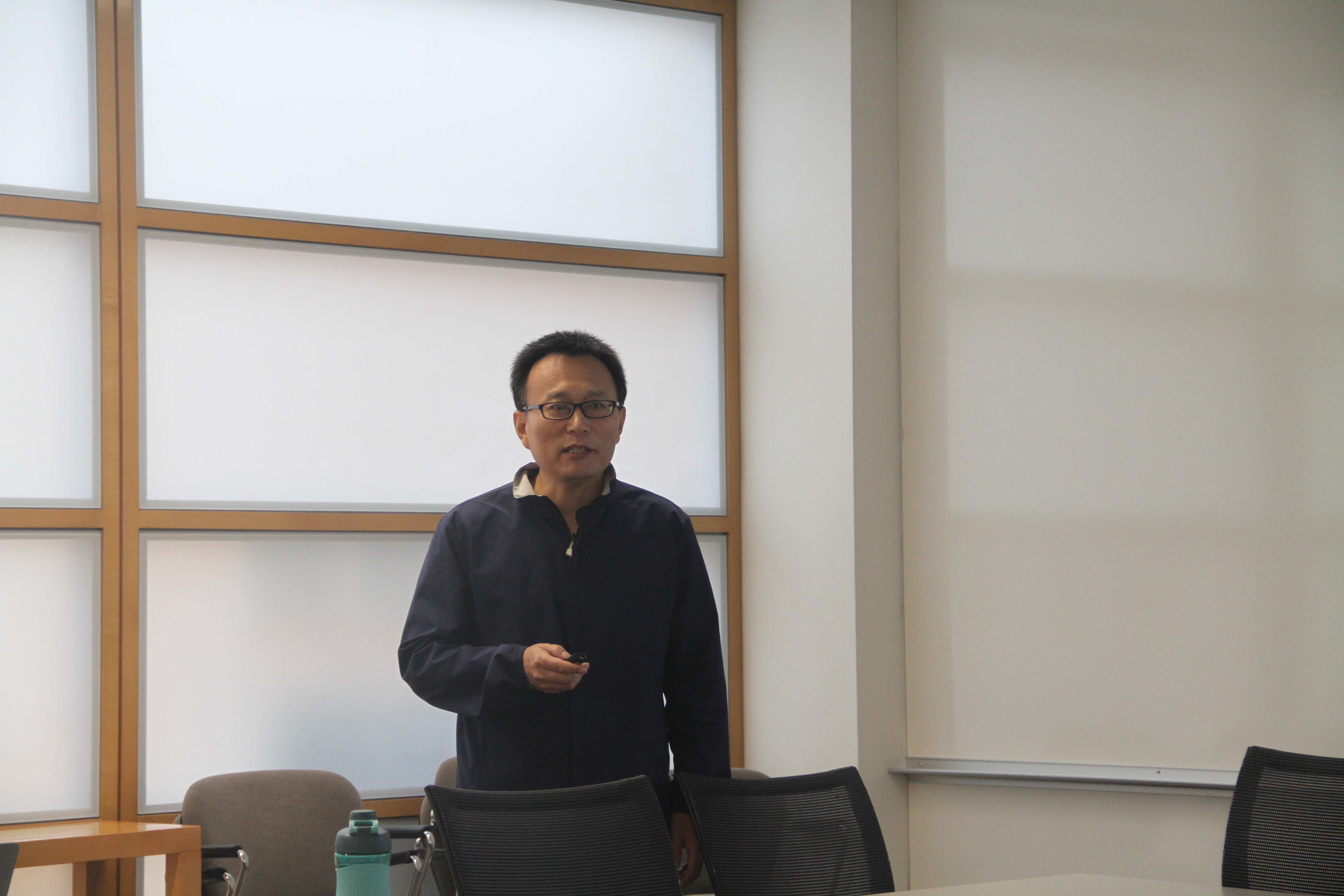
Speaker: Jianguo Liu Photographer: Weile Li
Professor Jianguo Liu, from Henan University of Science and Technology, introduced his work entitled “Compilation and Research of Data on Lazarist Missionaries in China based on CBDB.” Professor Liu’s project is about the activities of Lazarist missionaries in China, and he directly input into the CBDB system. The data entry and organization are mainly based on the French original work “Les Lazaristes en Chine (1697—1935)” by J. Van den Brandt and its Chinese translation, “Biographies of Lazarist Missionaries in China (1697—1935)”, translated by Geng Sheng. Using CBDB’s extensive data on Lazarist missionaries in China, Professor Liu uncovers some general characteristics of their activities in China: Although their activities in China were extensive, their presence was strongest and most active in the regions of Beijing, Tianjin, Hebei, Shanghai, and Ningbo. Lazarist missionaries placed a significant emphasis on training advanced clergy (priests) among the indigenous populations throughout China. The mission of the Lazarists was to send evangelists to rural and impoverished communities, establishing monasteries in impoverished and remote areas. Due to challenging living and working conditions, a substantial proportion of Lazarist missionaries had a lifespan of less than 50 years. Lazarist missionary graves in China are primarily located in the Zhalan Cemetery and Zhengfu Temple Cemetery in Beijing, Baitang Cemetery in Zhengding Prefecture, Dafangjing Cemetery and Jiangbei Cemetery in Ningbo, Fenghuangshan Cemetery in Sichuan, and Hongshan Cemetery in Wuchang, among others.
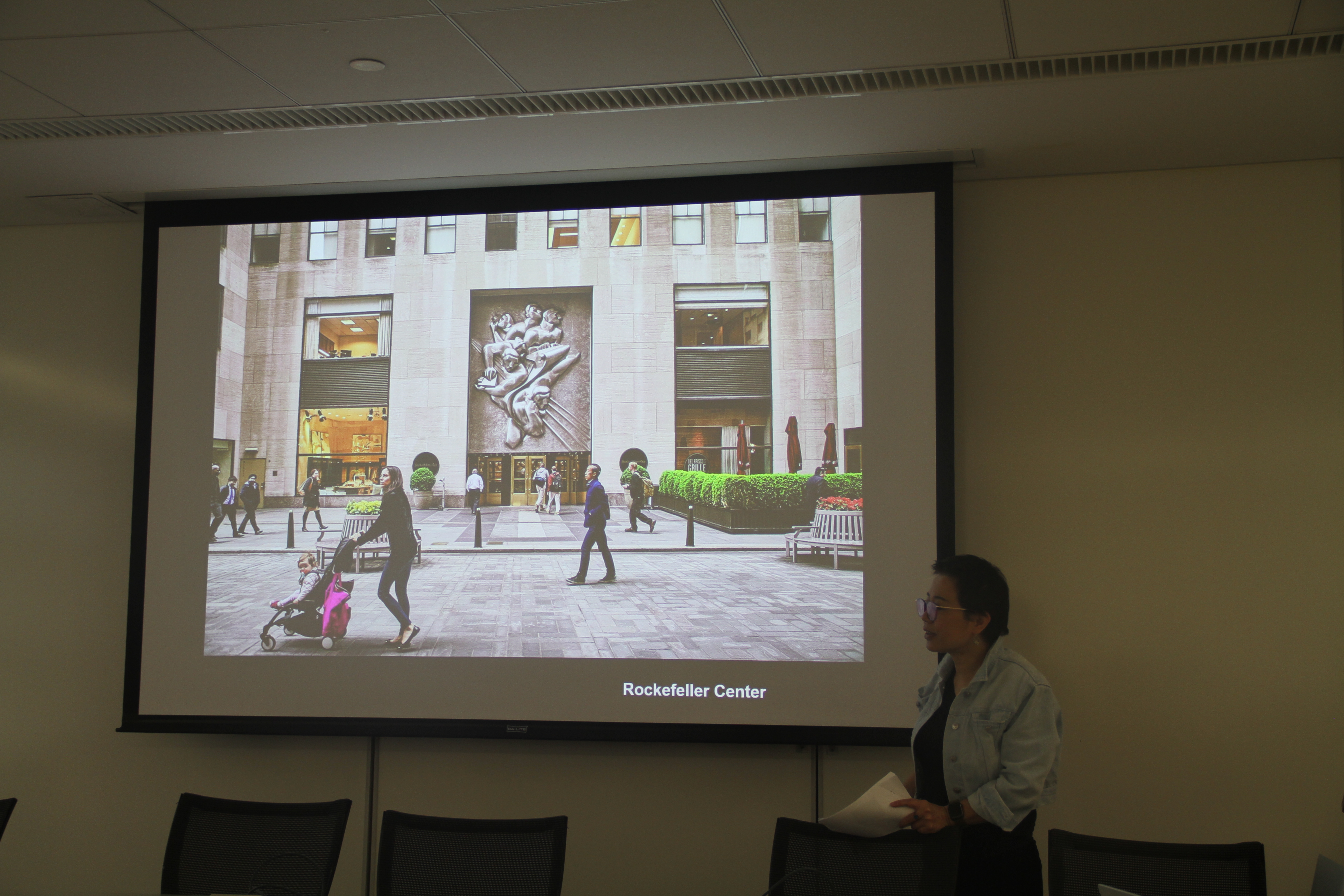
Speaker: Fan Xiang Photographer: Weile Li
Professor Fan Xiang , from Tsinghua University, offered a fascinating presentation entitled “Metamorphosis of Roles: Transitioning from Artists to Artisan.” Professor Xiang mentioned her previous genealogy project, which used CBDB data to visualize family trees in a three-dimensional view and provided a fresh elaboration on her upcoming project on Suzhou gardens. As a digital designer who learns data mining at CBDB every day, she admitted that she feels like sculptor Isamu Noguchi going stone-searching in a quarry. As such, viewers are free to assume that her work is about two sculptures by the artist. One is on display for the public to see, while the other is an exploratory trip into the understanding of stone. In the first story, data from the CBDB is used to visualize an exploratory voyage through historic family woods. The produced motion graphic depicting an old Chinese family forest provides the audience with a contemplative area. The second tale concerns the just-initiated development of the Suzhou Garden Database. She came across the following queries when doing data mining: “What was the garden?” “Who takes command of the garden aesthetics?” “What is today's garden?”

Speaker: Wei Zhang Photographer: Kaini Xiong
Wei Zhang, a Ph.D. candidate from Zhejiang University, gave a presentation entitled “Unlocking Historical Narratives: Visual Analytics Meets the China Biographical Database.” Her project aims to explore the significance of Visual Analytics (VA) in the field of Digital Humanities (DH) and its deep integration with CBDB. VA’s objective is to support knowledge discovery and hypothesis development from large databases. In this context, various disciplines converge to pursue common research questions or goals. Her report was divided into three parts. In Part I: CBDB Data Visualization, Wei shared her experience with the Digital Humanities Visualization Project, focusing on how visual analytics can empower CBDB-based historical research. In Part II: CBDB Data Quality Control, Wei delved into the design of a data quality control program tailored to CBDB, establishing rules to ensure data accuracy and consistency. In the final part: CBDB Data Fusion, Wei explored how to utilize traditional Chinese paintings to extract data for building a painting history database. In conclusion, Wei discussed the integration of this data with CBDB to enrich our understanding of history.
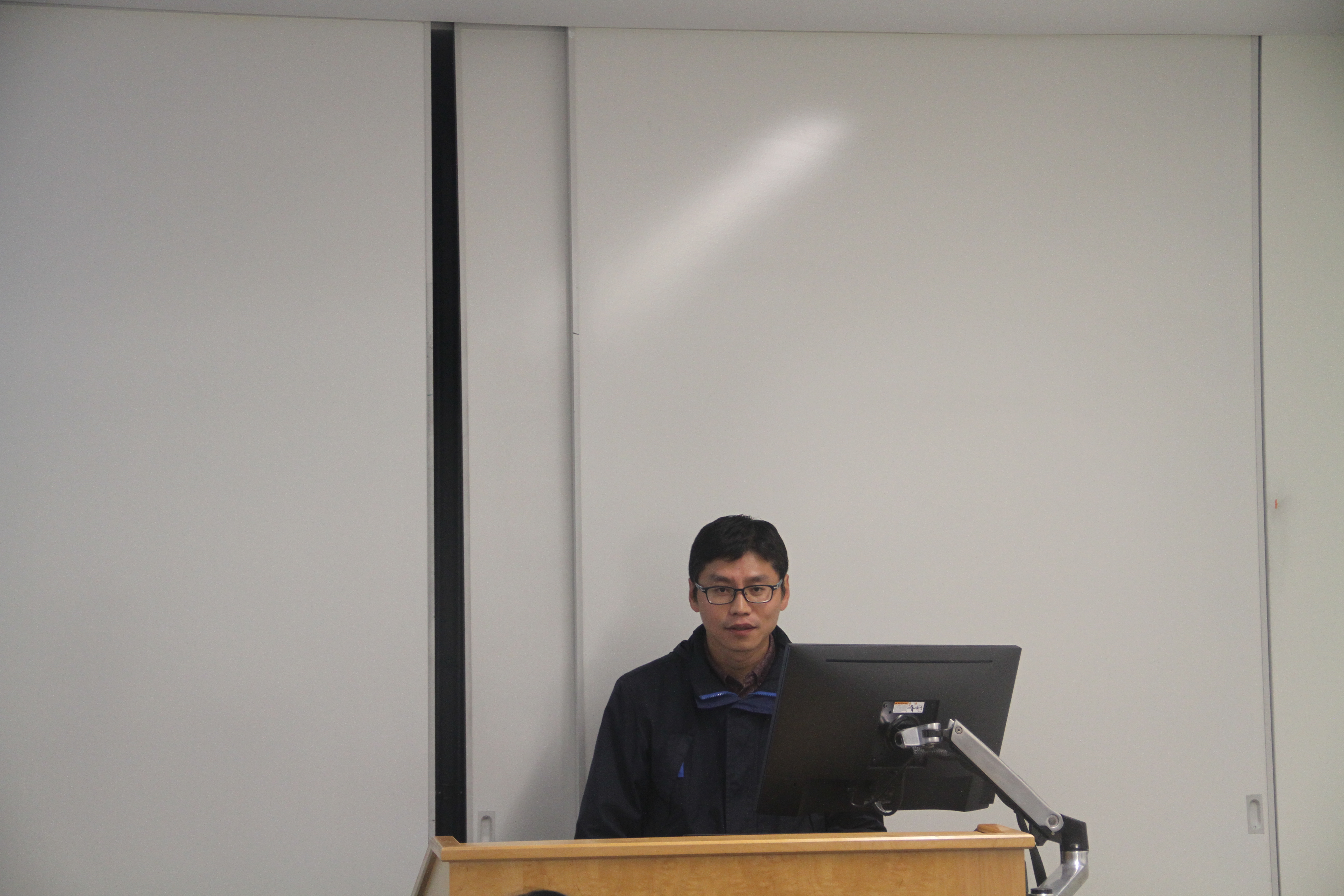
Speaker: Yong Jiang Photographer: Weile Li
Professor Yong Jiang from Zhejiang Gongshang University, presented his project entitled “Compilation and Research of Biographical Materials on Zhejiang Business Community.” His project is a tale of modern history, and half of it is about the people from Zhejiang. The status of people from Zhejiang was very prominent in modern Chinese history. There's a saying, "People from Guangdong revolutionize, people from Jiangsu and Zhejiang fund, and people from Hunan shed blood." It's evident that during this period, merchants from Zhejiang emerged and played an active role on the historical stage. Under the influence of the "industrial salvation of the nation" trend and the opening of the five ports for trade, the Zhejiang merchant group seized historical opportunities. They achieved impressive accomplishments in China's industrial and commercial fields, exerting a positive influence on modern China. However, the biographical materials about modern merchants are relatively scattered and diverse in form, making data extraction comparatively complex. In this project, a variety of tools such as ChatGPT 3.5 and 4.0, as well as regular expressions, have been used to analyze and extract data from these diverse biographical materials. The aim is to comprehensively showcase the historical background and process of the emergence of the Zhejiang merchant community, including their areas of business, regions of operation, scope of operations, as well as their familial relationships, social networks, and societal organizations.
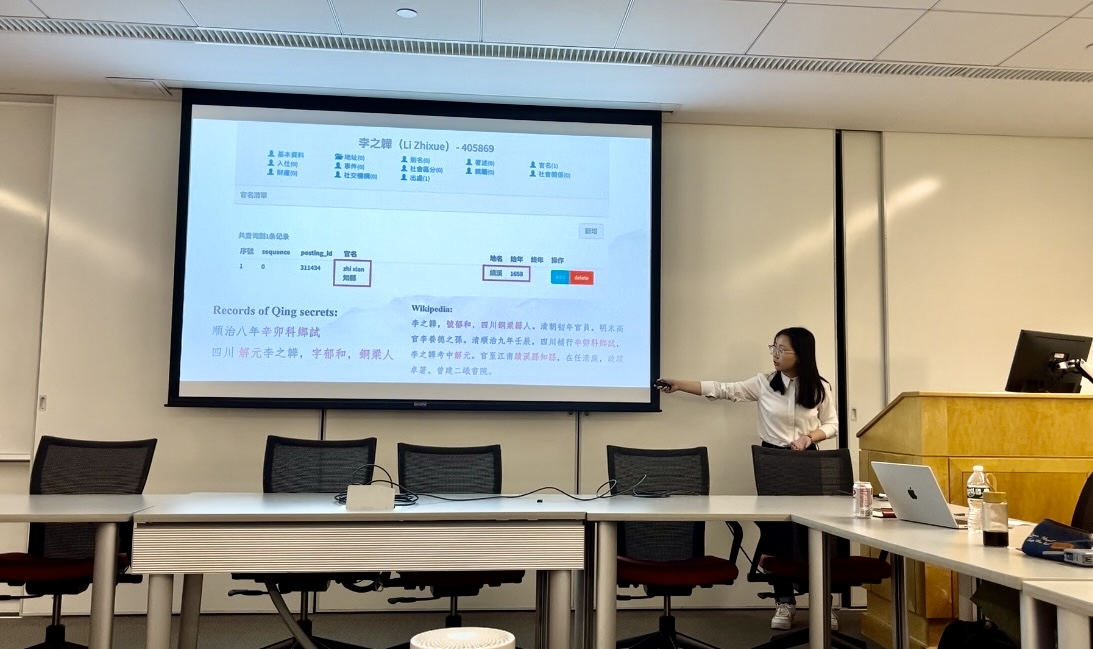
Speaker: Yiyi Wang Photographer: Kaini Xiong
Yiyi Wang, a Ph.D. Candidate from Zhejiang University, offered her presentation entitled “Engaging with ChatGPT: Data Mining and Processing in Qingmi shuwen.” She explained that "Qingmi shuwen" and its two sequel books are writings that describe the examination system during the Qing Dynasty. This source systematically records the names, birthplaces, and examination degrees of all the chief examiners, co-examiners, and provincial educational officials from 1645 to 1904. Additionally, they include information of the top students in the palace examination and provincial examinations, as well as the topics of each examination. In her research, Yiyi first used regular expressions to extract biographical information about examiners and examinees from "Qingmi shuwen" and transformed this information from text with regular patterns into structured and standardized data tables. Secondly, she employed digital humanities methods to address data disambiguation issues. Logical rules were established, and the "Ming Qing Jinshi timing beilu" data were used to disambiguate information related to individuals entering the bureaucracy. She engaged with ChatGPT in writing code tailored to specific needs, such as batch scraping of biographical information from Wikipedia, text tokenization (utilizing both dictionary-based and 2-gram approaches) to match data points, and automatic searching for approximate matching texts (more effective than Fuzzy-lookup for handling similar text comparisons), to resolve various disambiguation challenges. She believes that the emergence of ChatGPT has significantly reduced the barriers and costs associated with applying digital technology to the humanities. It enables humanists to independently process large, complex and intricate textual data. Finally, Yiyi discussed how the organized and disambiguated data will be used for further data mining in local gazetteers, quantitative analysis, and the establishment of teacher-student relationship networks, among other analyses, to delve deeper into related research topics.
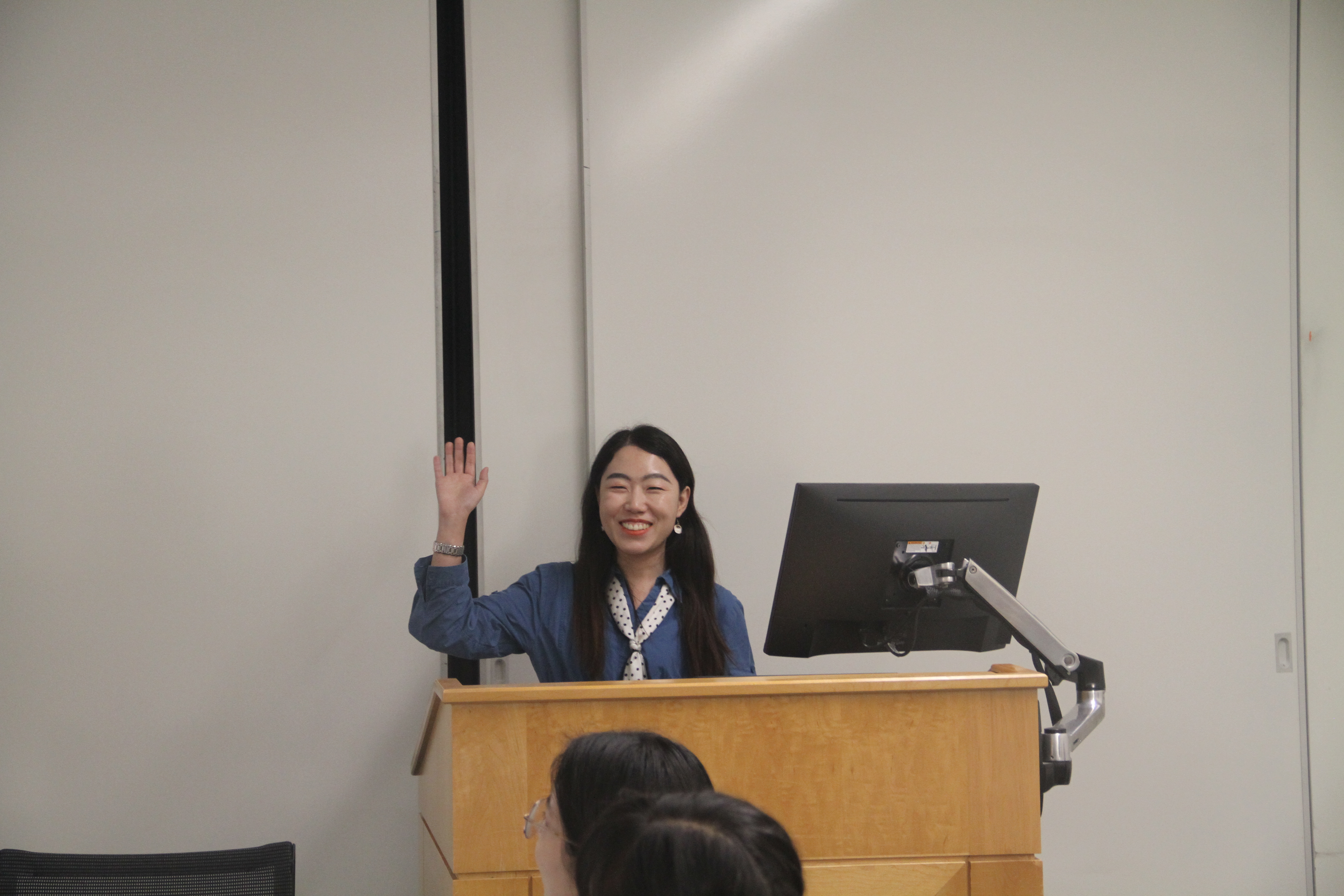
Speaker: Yufeng Han Photographer: Weile Li
Yufeng Han, a Ph.D. Candidate from Tsinghua University, delivered her presentation entitled “Social Network Analysis of the Quan Song Shi.” Her project aims to carry out social network analysis of the figures in Quan Song Shi to deepen understanding of the social relational networks of poets during the Song dynasty. The main focus is on the author information in Quan Song Shi and the information about the individuals mentioned in the poem titles. The core of this report revolves around the disambiguation work of the authors of Quan Song Shi. The specific work involves several stages, including integrating and analyzing the data of Quan Song Shi Author Xiaozhuan, handling the matching or non-matching individual data between Quan Song Shi and the CBDB database, writing code for PDF pagination verification of Quan Song Shi, and conducting manual verification, among others. These efforts aim to create a complete and reliable database. Finally, using the aforementioned data, Yufeng had constructed a more precise social network of Song dynasty poets and undertake further analysis.
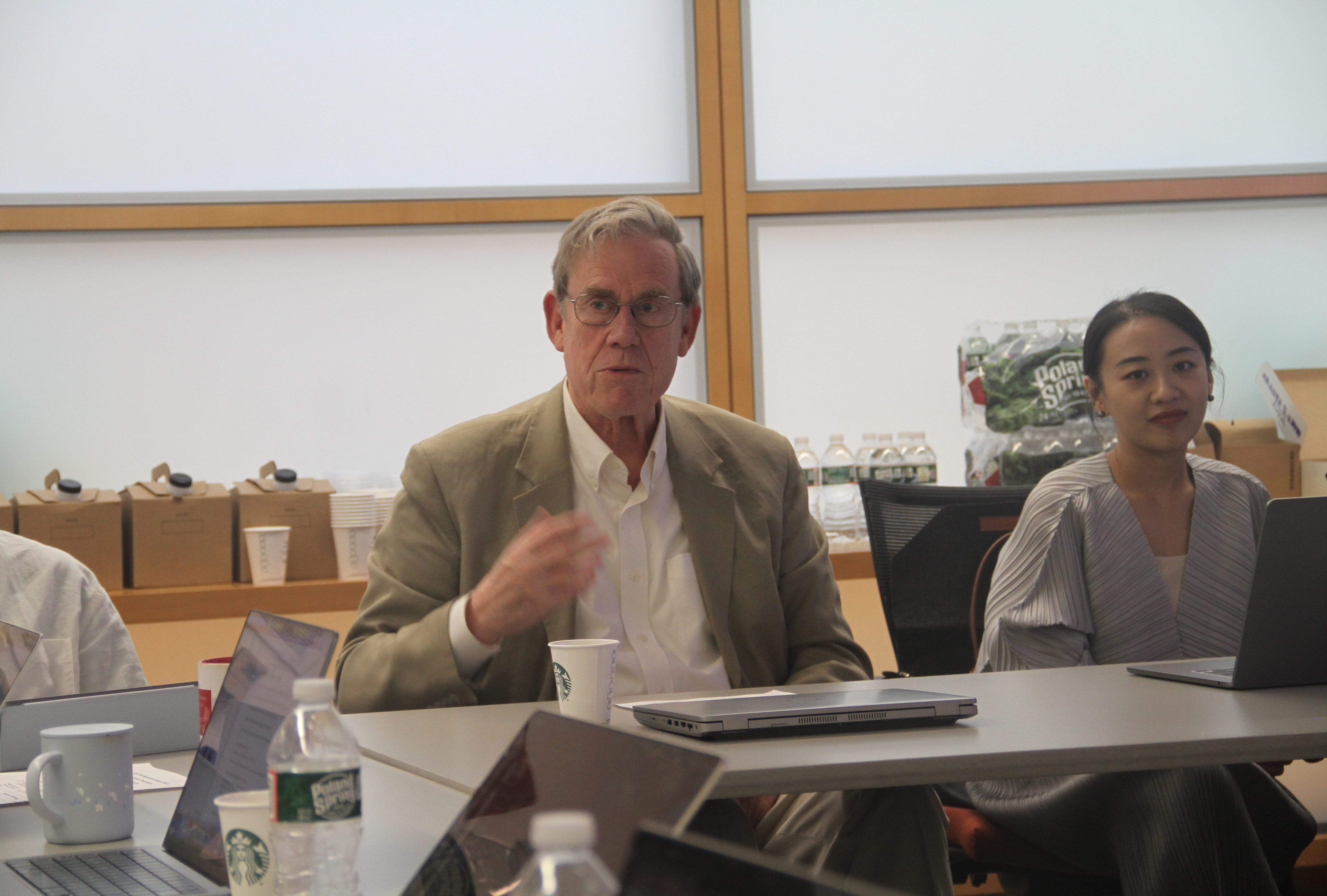
In the open discussion session, Peter K. Bol, Charles H. Carswell Professor at Harvard University, offered a remarkable summary and commented on the similarity of presenters. Other attendees and visiting scholars also provided invaluable comments. The entire report session was moderated by Mr. Hongsu Wang, Senior Project Manager of CBDB, and Dr. Kwok-Leong Tang, Research Fellow of Fairbank Center for Chinese Studies.
Editor: Wenxin Xiao
Reviewer: Hongu Wang
The content of each sessions above came from the presenters' abstracts.
Attachments:
- CBDB Visiting Scholars Report Session Agenda
- Yuqi Chen_Geocoding the Past World: Unearthing Coordinates of Early China from Text Using Large Language Models (PPT)
- Kaini Xiong_Leap in Methodology: Data Processing and Analysis of Hubei Literary Collections (PPT)
- Weile Li_Living Toward Death—A Brief Description of Epitaph Data Processing Methods in "Complete Song Prose" and Research on the Tomb of the Deceased (PPT)